Sara Cloe Rogers Haynie
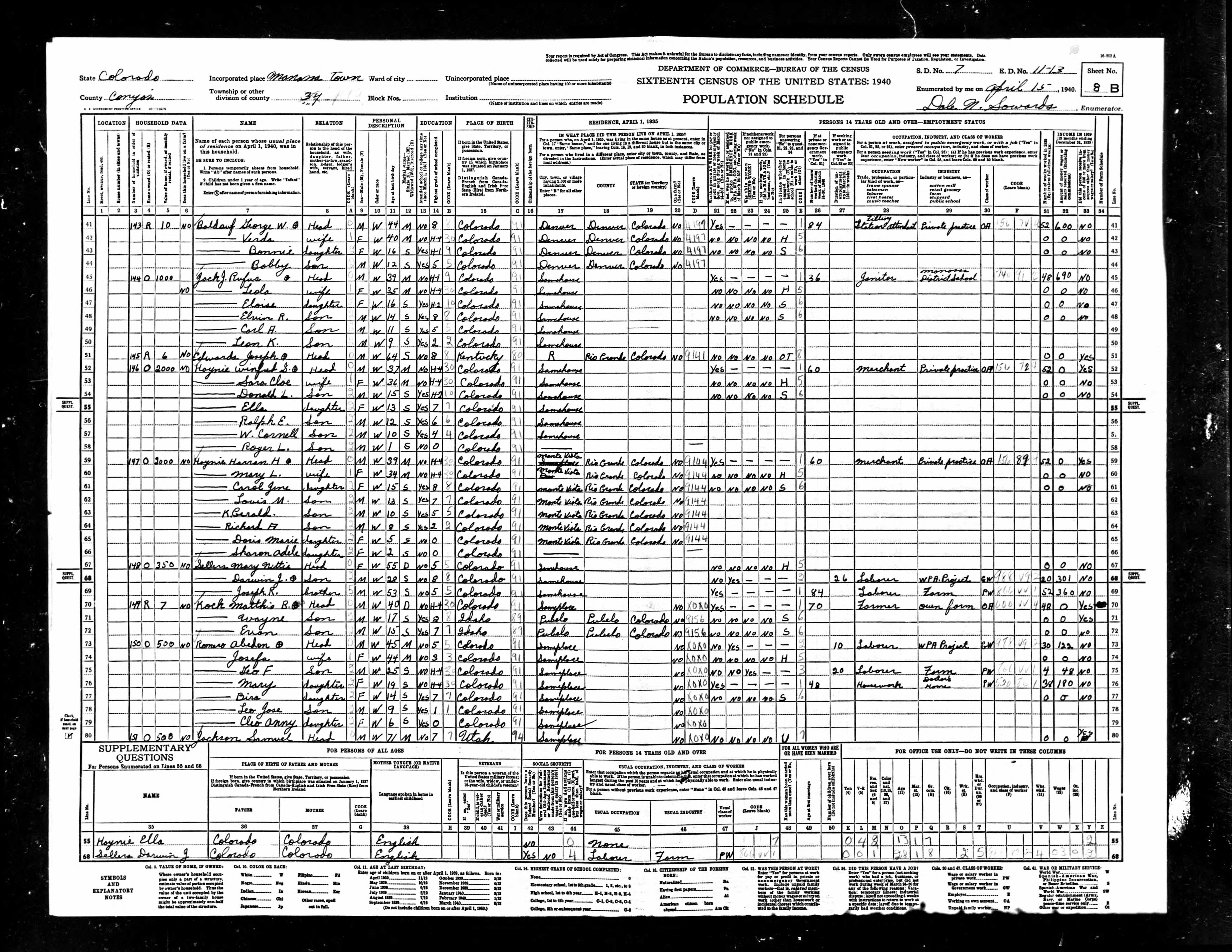
Go back to Sara's biography pageCensus Records:
Click any picture thumbnail to enlarge:
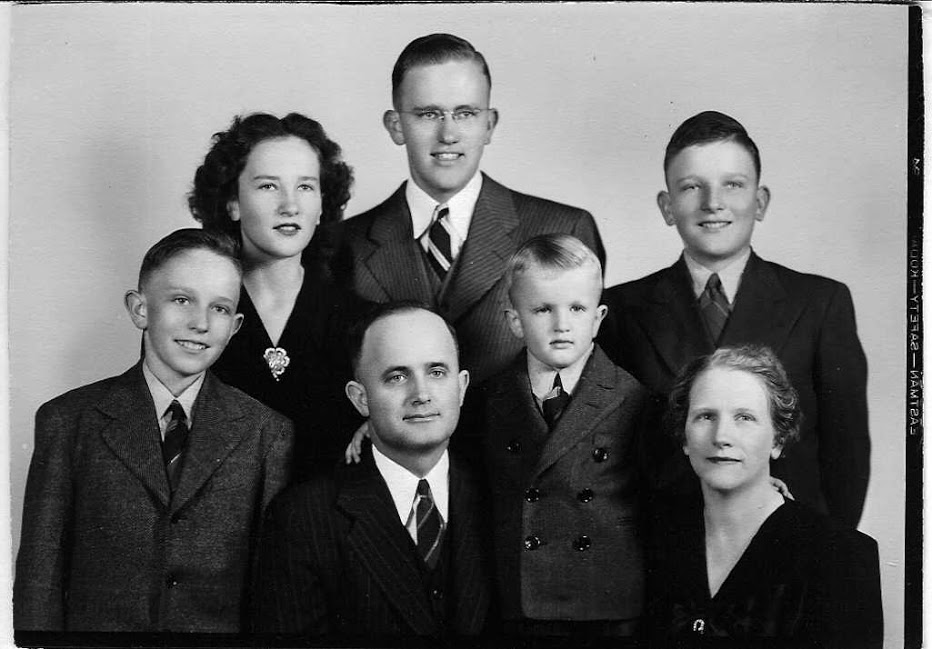
Photographs:
Click any picture thumbnail to enlarge: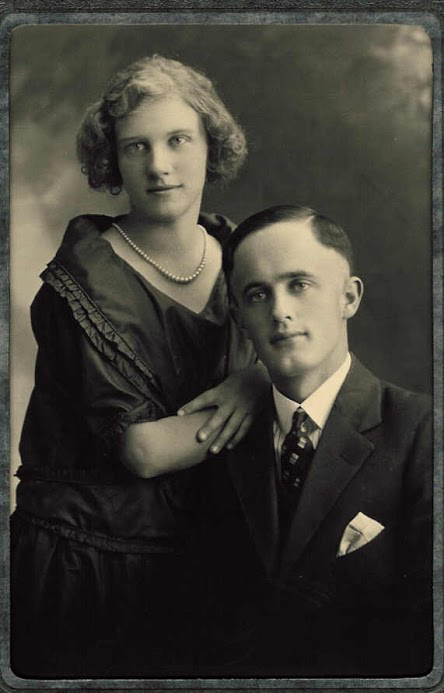
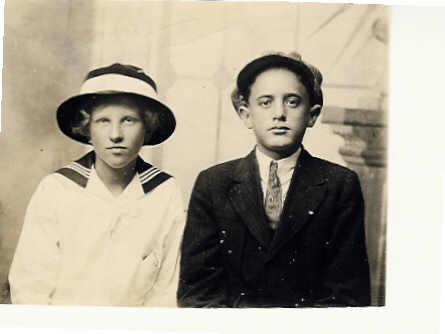
Marriage Certificate:
Click any picture thumbnail to enlarge:
Miscellaneous:
Click any picture thumbnail to enlarge: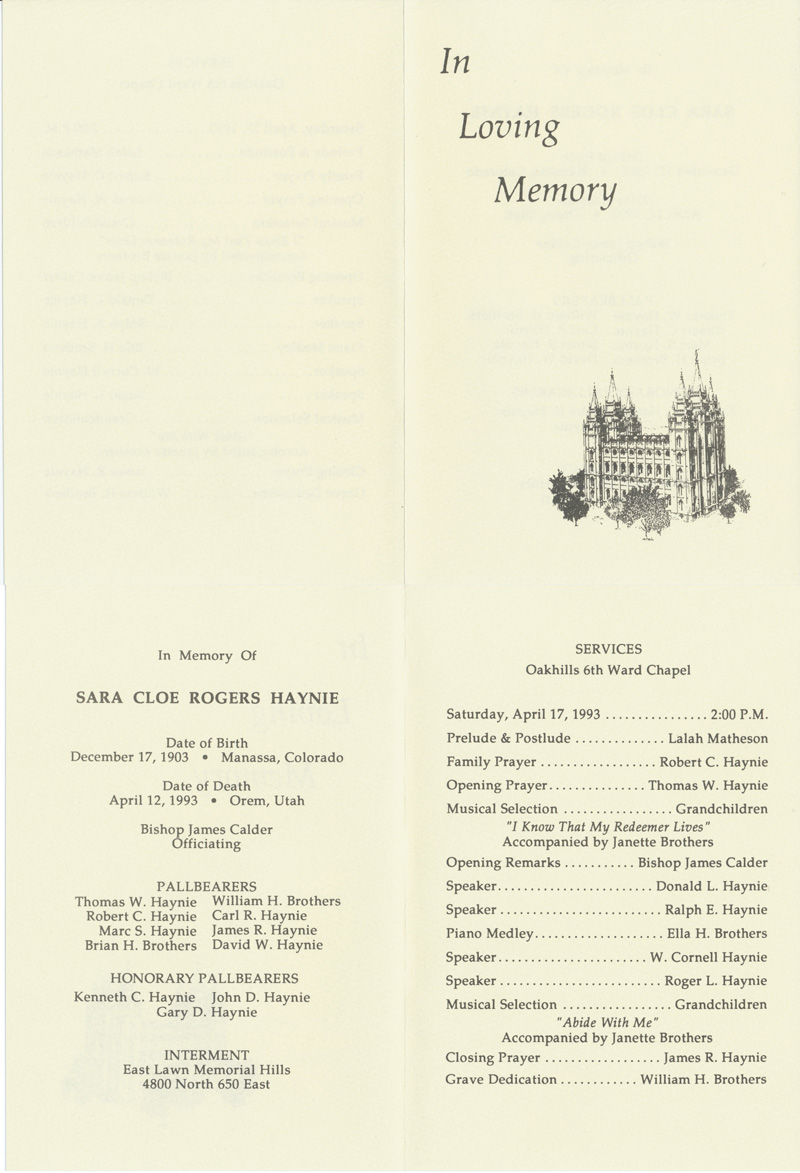
Transcriptions & Stories:
23 July 1976- Written Personal History
Personal history of SARA CLOE ROGERS HAYNIE (Autobiography)
(Retyped as she had written it)
On a cold winter night, 17 December 1903, I was born in a two
room log house in Manassa, Conejos County, Colorado Lot 2 Block 17.
This was a humble home. My parents are Gervacius Wayne Rogers and
Bernecia Jackson Rogers. They were working hard to get a start in
their young married life. At the time of my birth, my grandmother
Jackson was at our home along with Doctor George A. VanFradenburg.
Grandmother took care of my mother and me, and also my brother Wayne
four and my sister Edna two. In those days there were few hospitals
and babies were born in the home. There were no medicines to take
care of infections so new mothers remained in bed for ten days.
Aunts and friends helped in the care of the mother and her baby.
There has been disappointments and sorrows in my life time. I
have met with many bumps and these bumps have caused me to stop, look
and listen. However, some of these bumps have brought blessings.
At the time of my birth the town of Manassa was still in the
pioneer stage. Manassa was one mile square, after the plan of the
church, with sixty four blocks of ten acres each. Each block was
divided into four lots, and each lot was large enough for a home,
corral, stable, pig pen and garden. In the garden there was usually
a root cellar. Vegetables of every kind that would grow and mature
in the short growing season in the high altitude was planted.
Apples, red currants, red raspberries and strawberries could be
raised if we did not have a heavy frost in the early summer.
There was no running water or electricity in the home. A well
was dug close to the house and lined to the top with flat rock hauled
from the nearby hills. A wooden box, four or five feet square, with
a hinged lid was built over the well to keep dirt and trash from
being blown into the well by the wind. When water was to be taken
out of the well, the lid would be lifted up and a bucket with a rope
tied to the bail lowered into the water and then brought to the top.
This water was used for all household purposes: cleaning, washing
clothes, bathing, cooking and drinking. Also to water the livestock.
Each monday morning buckets of water would be carried into the house
and poured into a wash boiler on the kitchen iron cook stove. After
the water was heated, some of it would be poured into a galvanized
wash tub. The clothes were then rubbed on a corrugated wash board.
These clothes were then put into the wash boiler and boiled for a few
minutes. They were then drained from the boilding water and put into
a tub of clean water. If some of the clothes were still soiled, they
would be put through the same process again. The clothes would then
be put into a final clear rinse water. All of these clothes were
wrung out by hand, and then hung outside on a wire clothes line. The
clothes were made out of heavy material, and in the winter time they
would freeze to the line and it would take two days to dry.
All of my ancestors struggled and worked hard. I feel honored
to learn some things about them. My paternal great-great-grandfather,
Elisha Rogers, was born in Moore County, North Carolina, about 1790.
The family before him came from Pennsylvania and New York. Elisha
married Nancy Harrington and they were parents of two sons and three
daughters. Elisha was a carpenter and he built a mansion that stood
as a mark of distinction in his profession as a carpenter of merit.
My paternal great grandfather, Jesse Turner Rogers, was born in
Alexander County, North Carolina 22 December 1820. He followed his
father as a carpenter and did some farming. He was a good man and
the various churches asked him to become a member. He told them that
when they could give him something that he did not have in the church
to which he belonged, that he would join them, but he did not see any
need for a change unless he was benefitted. He never used tobacco in
any form, and did not drink coffee or liquor. He argued that liquor
was not good for man. He claimed that some day the true church would
be established and people would see and understand differently. He
was a poor man and when the Civil War started, although he had a wife
and ten children, he was drafted into the confederate army along with
his eldest son. On 12 May 1864 he was killed by a minnie-ball at
Appomattox, Virginia. His wife Leannah Chapman Rogers was born 28
March 1928. She was left with eight children to care for.
My grandfather, Enoch Milton Rogers, was born in Alexander
County, North Carolina, 23 October 1846. He was married to Margaret
Reese, 10 August 1871. They worked on rented farms. She was born in
Taylorsville, Alexander County, North Carolina, 7 January 1851. She
died in Manassa, Colorado 22 January 1895. After long and careful
investigation and study, my grandparents were baptized into the
Church of Jesus Christ of Latter Day Saints 22 May 1887. Because of
bitterness of friends and relatives, especially my grandmother's
family, they sold their home and few livestock, joined other
immigrants, and arrived in Manassa, Colorado 6 April 1888. My
grandfather helped build homes, dig ditches, fence land and other
pioneer work. He became a carpenter and a blacksmith. He died in
Manassa, Colorado 7 November 1927 and was buried in Manassa 9
November 1927. My grandparents were sealed in the Salt Lake Temple
6 September 1932 and most of their family were sealed to them
21 September 1932.
My father, Gervacius Wayne Rogers, was born in Alexander County,
North Carolina, 19 June 1872. After arriving in Manassa, Colorado,
6 April 1888, he obtained work wherever he cound find employment. He
worked in the timber cutting ties and posts, on canals, railroad
gradings, in the mines at Walsenburg, with carpenters and doing farm
work. On 9 November 1894 he received a call to fill a mission in the
Southern States and was assigned to Alabama and Florida. He was
released 17 April 1897. My father was tall with brown hair and blue
eyes. He had many talents for his day. After arriving home from his
mission he worked in the James H. De Priest store for awhile, He
married my mother, Bernecia Jackson in the Salt Lake Temple 30
November 1898. They started their married life in the little two
room log house. Father took up farming. He retired from active farm
work in 1930. While farming he raised hogs, potatoes, wheat and
other grains. He always had a beautiful garden. He was one of the
first in our area to get apples trees in production. He kept the
trees well trimmed and they bore nice large apples.
My father was ward clerk in Manassa for twenty five years, and
also held other offices in the church later. He spent much time in
genealogy work. He not only prepared extensive genealogy records for
his family and other relatives, but helped many other people in the
preparation of their genealogy records, and in getting names cleared
for Temple work.
Many people were poor and could not buy granite or marble grave
markers for their departed loved ones. My father felt like all
departed people should be remembered and that some kind of a marker
should be placed at their graves. He became very proficient in the
making of cement grave markers. He whittled out his own lettering
tools and made various forms for molding the cement monuments. He
made, by hard hand work, hundreds of grave markers and set them in
the various cemeteries in the San Luis Valley, and many of them were
taken to distant places. His charge for this work was very little,
an in many cases he only asked for the actual expense for the
material used.
Father was a civic worker, and wanted his little town on the
map, and would work for progression. He spent many days, weeks,
months and years for the Conejos County Fair. His time was given
free. At his own expense he took exhibits from the county fair to
the state fair in Pueblo.
When I was a small child he was a member of the Manassa Brass
Band. I can remember the pretty red band suits with the gold
trimming.
On 25 April 1948 my father had his right leg amputated above the
knee, due to a blood clot in his circulation system. He did not live
too long after this and died at his home in Manassa, Colorado 22 July
1951, from a similar circulation problem in his left leg. He was
buried at Manassa, Colorado 26 July 1951.
My mother, Bernecia Jackson Rogers, the third child and first
daughter of Samuel Jackson and Hannah Maria Jaques Jackson, was born
in Nephi, Juab County, Utah 29 June 1874, with dark brown hair and
brown eyes, and was quite slim until late in life. With her parents,
three brothers and one sister she moved to Manassa, Colorado,
arriving 1 March 1889. After her marriage she worked hard, milking
cows, caring for chickens, helping with the garden work along with
her work in the home. She raised plymouth rock chickens. They were
large and made good bakers. They were also good layers. Mother
would take, or have the children take eggs to the Hugh L. Sellers
store to trade them for home needs. If there were eggs left over,
little brass chips would be given, and these chips could be exchanged
later for merchandise.
My mothers work was hard in the home because of very few
conveniences. She made friends wherever she went. She was always
cheerful and full of fun. She kept her troubles to herself.
Mother was a tireless and faithful worker in the Church. She
was baptized 7 September 1882. (My father was baptized 5 July 1888)
From her own autobiography we have the following: "--I have held many
positions in the Church of Jesus Christ of Latter Day Saints. My
husband and I went to Salt lake City in 1898 to represent the San
Luis Stake Sunday School at the Sunday School Jubilee -- 50 years of
Sunday School in the Rocky Mountains. For three years I was
secretary of the Ward Sunday School. In 1909, I was chosen secretary
of the Ward Relief Society. I represented the Relief Society for the
Stake in 1916. In 1930, I was made secretary of the Stake Relief
Society. In 1917, I was chosen Stake President of the Y.W.M.I.A.
Twice I have been president of the Ward Relief Society. I have taken
great pleasure in working in the House of the Lord. It has been my
pleasure to take endowments for queens and princesses. I have heard
the heavenly choir sing '0, My Father" in the Arizona Temple." In my
mother's day there were very few cars, and most of the going was by
foot. Horses and buggy's and occasionally a car would be used for
transportation.
My father and mother were parents of two sons and two daughters.
My mother died, after a lingering illness of three years, in our
home in Manassa, Colorado, 27 October 1959. Burial in Manassa
Cemetery, 29 October 1959.
My mothers family on her father's side immigrated to the United
States from England. Benjamin Jackson, my great grandfather, joined
the church in early days, when the gospel was first taught there by
Heber C. Kimball, George Albert Smith, Wilford Woodruff and others.
Benjamin was faithful and wished to gather in zion. He had a large
family and his means were meager. It was decided for him to proceed
to America, and possibly he could find employment, earn money and
send back for his family. In 1849 Benjamin came to America in a
sailing vessel, and was not heard from again until the late 1860's.
About 1870 he came into Nephi, riding a mule, looking for his family.
His wife, Ann Grimshaw, and family came from England to Utah in 1856.
Benjamin was declared legally dead and his wife was declared a widow.
She then married a man by the name of Jenkins. Facts of his
whereabouts for so many years were soon told by him. He had
successfully crossed the ocean, and while crossing the plains had
fallen in with a group of forty niners on their way to California to
dig gold. He never wrote back to England, or if he did, his family
did not get his letters.
My grandfather Samuel Jackson was born 13 July 1844 in
Manchester, Lancashire County, England, the son of Ann Grimshaw and
Benjamin Jackson. When he was about twelve years of age, with his
mother and other members of his family, he came to America in the old
sailing vessel, HORIZON, with a group of immigrants who were members
of the Church of Jesus Christ of Latter Day Saints. He had been
baptized into the church in 1859. This company of immigrants landed
at Boston and reached Iowa City by rail 8 July 1856. This was a hand
cart company, and they were outfitted at Florence, near Omaha,
Nebraska. These people suffered many hardships and privations. One
child in the family died shortly after ariving in Utah. The family
soon located in Nephi.
My grandfather, Samuel Jackson, and my grandmother, Hannah Maria
Jaques, were married in Nephi, Utah, 31 December 1867. They are the
parents of three sons and two daughters. In 1889 the family moved to
Manassa, Colorado to establish their home. He was Bishop of Manassa
Ward from 16 February 1896 until 6 May 1917. He died 3 May 1919 in
st. George, Utah, where he had gone, hoping to benefit his health.
Burial at manassa, Colorado.
My grandmother, Hannah Maria Jaques Jackson was born in
Coventry, Warwickshire, England 18 February 1850, daughter of
Zachariah Jaques and Sarah Clower. She was baptized into the Church
of Jesus Christ of Latter Day Saints, in 1859. In 1863, with her
mother and other family members she came to America in a sailing
vessel. While on the ocean she came down with a severe fever.
Constant prayers were offered for her recovery, or that she might
live until they landed, so that she might be buried on land. She
recovered, except for a hearing defect, which remained with her for
life. They took the train from New York City, to Omaha, Nebraska,
where they were met by wagon trains sent by President Brigham Young.
Soon after arriving in Salt Lake City, they continued to Nephi, Utah
where they established their home. In 1889 with her husband and
children she moved to Manassa, Colorado. She died in her home in
Manassa 17 August 1929. Grandmother was a very good wife and mother.
My childhood days were so happy with her. I spent many summer days
with her and my cousin Mamie at the Jackson ranch east of Los
Cerritos. My grandparents were so good to their grandchildren, and
taught us many things that has helped us through our lives. Many
times I have heard them say, "You cannot get something good for
nothing." "You will have to work for it." They felt that in the
early morning was the best time of the day to do your work. In my
lifetime I have felt this way, to start the day early.
My brother, Wayne, four years older than me, was born in
Manassa, Colorado 4 October 1899. Wayne started early in life
helping my father on the farm. He enjoyed any kind of machinery. He
built a bug car out of old engines and parts of old cars and made it
run. He grew up with cousins and friends in our little town. Went
to school and enjoyed the friendship of the crowd his age. Wayne
filled a mission in the Northwestern States Mission 1919 - 1921. He
married Mildred Barton in the Salt Lake Temple, 27 December 1923.
Her parents Thomas Barton and Martha Blair Barton died when Mildred
was quite young. She lived in the home of her two bachelor uncles
Alonzo and Frank Blair. Her brother Alonzo Barton also lived with
them until his marriage. Wayne and Mildred are the parents of one
daughter, Phyllis Martha Rogers, born 18 July 1925 and died 7 July
1941, and Thomas Wayne Rogers, their son, born 23 April 1929.
My sister Edna, was born in Manassa, Colorado, 29 December 1901.
Edna was a very sweet person, and made friends very easily, and was a
good scholar in school. At eleven years of age she suffered with
blood poison in her left arm. Doctor Judson would come to our home
to treat her. A year later she died from brights disease. I missed
her so much and many nights I dreamed about her and wished she was
back in our home. Her death was 14 March 1914. Burial in the
Manassa Cemetery.
My brother Heber Milton, was born in Manassa, Colorado, 19
January 1906. He was a happy boy, and like my mother, made many
friends. He started out very young to build up a sheep herd. In
order to get a few sheep he would herd sheep all summer on Wolf Creek
Pass for our uncles, Samuel and William Jackson. Heber married
Goldie Lillian Hartley, daughter of Henry Hartley and Josephine King
Hartley, 6 March 1929. They were parents of three daughters,
Elizabeth Y. (Betty), and twins Donna L. and Dorothy L. Elizabeth
was born 13 February 1930, and the twin girls 23 June 1932. Dorothy
died 26 June 1932. Heber and Goldie were divorced when the girls
were small and they both regretted this divorce later. Heber married
(Second marriage) Mildred Werry. Their children are Robert Scott
Rogers, born 31 January 1941 and died 7 August 1941. Burial in
Manassa Cemetery. Herbert Milton Rogers, born 25 March 1942. A son
of Mildred Werry, by a former marriage, born 19 June 1938, was reared
in the home of Heber and Mildred, and is known by the name of Thomas
Archie Rogers. Heber died in Ely, Nevada, 6 September 1959.
I have watched progression come in my lifetime of seventy two
years. Many great dams have been built, the power from which has lit
up cities and towns. Along with this electricity, many modern
appliances have been invented. The electric washing machine replaced
the wash tub and wash board. Electric irons replaced the flat irons
that were heated on the iron cook stove. Electric ranges put the old
iron cook stove in the shed. The electric refrigerator replaced the
ice box. All electric appliances that are not mentioned have been
put into use. The telephone, radio, television and picture show can
now be enjoyed by most everyone. Right now while I am writing this
history, our home is nice and cool with the electric air conditioner.
Seventy two years ago there were very few automobiles. The airplane
was just getting started. The Wright Brothers flew their plane the
day of my birth, 17 December 1903. All of these things were quite
crude at that time, but it was a start.
When I was four years old, my uncle Lafayette Jackson, brought a
wool buyer from Denver to our home. This man was driving the first
automobile I had ever seen. The man suggested that my uncle take his
nephews and nieces for a ride. This was a real thrill for all of us.
This was an automobile with a top that could be folded back and used
open air. We rode north about two and one half miles. The wind blew
our hair and it was so cool and pleasant. There were so many of us
that we had to set close together, but we could say that we had our
first ride in an automobile.
There were many children in our neighborhood and most of them
were cousins. One special cousin was Mamie Sowards, whose mother
died the day she was born, 24 September 1903. She was raised by our
maternal grand parents. Mamie and I were together so much that it
almost seemed like we were sisters. Mamie would call by for me and
we would usually set near each other in school. We had very few
disagreements that did not last, and we loved each other.
Grandmother Jackson was always finding material and did our sewing.
While my sister, Edna, was alive, we three girls had dresses made
alike.
When Mamie and I were four and Edna was six, we attended summer
school for a few weeks. The teacher was Frank O. Soule. There were
so many children in that school that the teacher had his problems.
When I was six I went to kindergarten. The teacher was Cella
Christensen (Now Crowther). I had a lot of fun that year, and I can
remember the stories and songs that were taught. When I was seven,
my first grade teacher was Lola Koch (Now Beck). I had the same
teacher in the second grade. Lola was so kind and did so much to
help us learn. While in the second grade our teacher was married to
Byron Beck of Sanford. With help from older people we gave Lola a
surprise party, and each child in the second and first grade (she
taught the two grades) donated five cents each and we bought a
crystal berry set. My third grade teacher was Cora Willis. This
year we had a new, two story, red, brick building with a basement.
This seemed like such a large building, after the older four room
school house. My fourth grade was taught by Brigham H. Harrison. He
taught us many songs and always started the school day with a
continued story. My fifth and sixth grade teacher was James A.
Holman. He taught from the books and never had a song or a story.
My seventh grade teacher was Marguerite Thomas. She was a very fine
teacher, but each of us had to be careful that we did not do anything
disturbing in class. She believed in punishment and you always paid
for any trouble you might cause. I had my day, and will always
remember it. For talking across the isle to another student during a
study period, I had to stay after school and write five hundred
times, "I will not talk in class again". I was late getting home
from school that day and was assigned extra home work for misbehaving
in school. My eighth grade teacher was Brigham H. Harrison,
again. Our class was back to singing and stories. He was a good
teacher and we enjoyed him and he enjoyed the children.
We had graduating exercises from the eighth grade. This
separated many of the children from ever having anything in common
again. Many of the children did not continue into high school. At
our graduation, each child had a part, a song, a reading or a stunt.
When my turn came, looking at the audience caused my mouth to open
but nothing came out. Tears rolled down my cheeks and I felt so bad,
as I had looked forward to this great night.
The parents were happy when school was out. I can shut my eyes
and see the joy and fun that the children had. The boys had their
hair clipped short for the summer. The girls helped their mothers
with spring house cleaning. We made trips to the little river for
picnics. The boys went to the river to the "old swimming hole"
almost every day, after work in the fields and gardens were finished.
The girls could play marbles as well as the boys. We played
Danish ball and rode horses. Each fall the sheep men would turn
donkeys loose in the town. These donkeys had been used for packing
during the summer. These donkeys could be used by any of the
children that would take care of them through the winter. In the
spring, the sheep men would gather the donkeys up to get ready for
the pack up to the mountain again. If you never rode a donkey, you
have really missed something. Sometimes a person would sit on a
donkey for an hour, as the animal was so stubborn he would not move
an inch. You could kick, pound, and yell, but nothing would cause
the animal to give you a ride. Many of the boys had bruises or bumps
from a quick buck or side step that would throw them off, or a kick
if they got too close to the hind legs of the donkey. My brother,
Heber, always took care of a donkey each winter. He learned how to
train them and could get more out of a donkey than most of the boys.
We all enjoyed the things that Heber could get a donkey to do.
In the fall of 1919 I entered the San Luis Stake Academy. I had
many new friends. Boys and girls from Sanford, La Jara, Romeo and
other towns came to the Academy. At the time I am writing this
history, my mind turns to these boys and girls. Each one went his
different way after graduation. Some made good and others just
seemed to get by. Most all of them married, raised families and
moved to other places. Some have died.
The Academy furnished good learning possibilities. We had the
best teachers the church could send at that time. All of the young
folks took advantage of the music and singing. There were many
singing groups for boys and girls, and I enjoyed my singing groups
all four years. There was the domestic science and domestic art
classes that I enjoyed so much, as well as all of the other classes.
The Academy had nice clean parties, dances, and other things of a
social nature. The basket ball games were great. I graduated in the
spring of 1923 as valedictorian. This was the largest class in the
history of the Academy.
When I was Three and a half years of age, my father bought a
new two seat buggy. The seats were upholstered in leather. Just
back of the rear seat was the end gate, which could be dropped, and
sometimes the children were allowed to ride with their feet hanging
down.
One day my father told the family that a circus was coming to
Alamosa, twenty five miles away, and if he could get his crop
irrigated in time he would take us to the circus. Grandmother
Jackson and Mamie were to go with us. Mother worked hard getting the
cream churned into butter, as she made butter for different people
and they expected it on certain days. Mother and grandmother fixed
a basket lunch, and early in the morning we left for the circus. We
had two old faithful horses, Prince and Don to pull our buggy. It
seemed like it took hours to reach Alamosa. Our horses were tied to
a hitching post and we had to walk more than a block to the big tent.
My mother, carrying my baby brother Heber, grandmother, Mamie, Wayne,
Edna and I were trying to keep up with my father. Father told us to
wait for him at the big tent entrance, and be ready to go in when he
came with the tickets. As we approached the entrance to the tent we
noticed many cages of animals. As I was passing one cage, a lion
gave out a big roar. This frightened me and I turned and started
running toward our buggy and said, "I'm not going in there." Father
was very disturbed at me but rescued me before I got very far. We
then entered the big tent and sat about one third of the way up in
the seating. I found a place where I could hide my face, and did not
see any of the show. It was late in the afternoon when the circus
was over, and late in the evening when we arrived home, tired out and
ready for bed.
We had a very nice neighbor by the name of Sarah Sellers. She
came to our house one day and told my mother about a new singer
sewing machine she had just bought. She said this machine "sings
like a bird". My mother took me with her to see this sewing machine.
Both of the women sewed some on the machine. I listened and listened
for the sound of the bird singing. It did not sound like a bird.
One lesson I learned, and I am sure my mother learned a lesson from
it, one day she called me and asked if I knew where her special cake
plate was. I said "No". She seemed to feel that I knew more about
the plate than I was willing to admit. She questioned me several
times and each time I would tell her that I did not know anything
about the plate. Finally she sat down in a chair, pulled me to her
knees, looked me straight in the eyes and said, "Cloe darling if you
will tell me you broke the plate, I will always love you." Who could
ask for anything better than to always be loved by your mother? Then
I said, "Yes I broke the cake plate." A few days later when I was
playing, mother called me to her knees again, looked me straight in
the eyes and said, "Cloe darling, why did you tell me you broke the
cake plate. I found it and it isn't broken. I do not like for you
to tell me stories." I looked mother straight in the eyes and said,
"You told me if I would tell you I broke the plate, you would always
love me." Mother realized the mistake she had made. This little
story was brought up many times in our home.
I was the first in our family to come home from school with
childhood diseases: measles, whooping cough, pink eye and chicken
pox. I skipped scarlet fever. When the children's diseases got
started, there were more children at home than there were in school.
The town would call a quarantine, and any family where there was a
disease would be quarantined by a little red flag on the gate post
until the disease was over. Some years, because of a disease, the
school would be closed from four to six weeks, and maybe longer. It
was always cold weather when the schools were closed because of a
disease, and the children who were well would read books, play games
and do other things to take up their time.
In the summer time there was the 14th of June "Flag Day"
celebration. The Manassa Brass Band, with twenty five to thirty
members would gather at the Stake House lot and play band music,
until it was time for the "Flag Day" program. After the program the
girls would present flag drills and braid the May Pole in the church
yard. The girls participating wore white embroidery dresses with
pink and blue sashes. During the noon hour each family would have a
flag day dinner with home-made ice cream. In the afternoon, games
and childrens races would be held at the church lot. The children
would be treated to hard tack candy passed around in large wooden
buckets.
Again on the fourth of July, we would have the band, the big
noon meal, and then the sports. Everyone dressed for the occasion.
The women in their best dresses and the men wearing flat top straw
hats. The men also wore stiff celluloid detachable collars. Men
held their necks so stiff, they looked like they had pushed their
heads through a big straw hat. Everyone honored that day. There was
a tall flag pole in the center of the church block and we watched the
raising of the flag.
The twenty fourth of July celebration came next. The church
people put in extra work in the preparation for this day. The town
had a beautiful band wagon, pulled by two fancy horses .. The band
would ride and play in this wagon. There would be buggies and
wagons, with hay racks, decorated with cotton wood limbs, that people
would bring from the river east of town. The children from the
different classes would ride on the hay racks, and the older people
would ride in the buggies. Again there would be a program after the
parade, then the big noon meal. Maybe there would be a watermelon
that had stood in a wash tub with ice. In the afternoon there would
be the foot races and other sports, and then the treat of hard tack
candy passed around in the large wooden buckets. Some of the church
people would put up a stand and sell lemonade, some of the lemonade
was colored pink. If we had a nickel or two we would buy a glass of
lemonade or a package of popcorn. On the popcorn package would be a
paper fan. The fans were colored red, white and blue. We cherished
these things.
It was soon time to go back to school. Some of the children
were kept out of school in the fall, to pick up potatoes or work in
the sugar beet fields. My father planted twenty acres of potatoes
each year. In the summer we pulled weeds and hoed potatoes. In the
fall we picked up the potatoes. Two years, when I was nine and ten
years old, my father planted twenty acres of sugar beets. When the
beets started to come up, we children would crawl on our knees and
thin the beets leaving them about nine inches apart. Later we would
hoe and pull weeds out of the beets. In the fall the beets would be
plowed out of the ground and we would pick them up and put them in
piles about ten feet apart. Next came the topping of the beets. We
would sit by the piles of beets and cut the tops off. someone would
then come by with a beet wagon, with a dump bed, drawn by horses,
load the beets and take them to Romeo or Bountiful and load them on
freight cars to be taken by the railroad company to the sugar
factory.
Haloween was the next great event. Children did not go from
door to door for "trick or treat". Our homes would be decorated with
pumpkins and ghosts, and anything that would make the party fun.
There would be pumpkin pie to eat and hot chocolate to drink.
When thanksgiving time came, we would have big family dinners.
Grandmother Jackson had the largest home and we would usually meet
there. Uncles, aunts and cousins would be present. We would have
roast beef, roast chicken with dressing, pies, cakes and everything
for a big dinner. There was always two tables. The first table was
for the adults and the second table for the children. The children
played games in the living room until their time came to eat. There
was just one thing I think about now of the good old days that I did
not like. That was when the little children had to wait for a second
table. Today my heart goes out for them. I remember when I had to
wait. I would watch a big dinner being prepared. When I looked over
the long table, I would see the tallest bowl of mashed potatoes,
hollowed out in the center of the top and filled with butter. There
was plenty of food left for the children, but the waiting for the
second table was so long.
Christmas was a big time. We did not get many toys or gifts,
but we had the Christmas spirit. Grandfather Jackson dressed up as
Santa Claus, and went to all of my cousins homes. He left hard tack
candy at each home. We had a Christmas tree each year when I was
small. My father would bring a pinion tree from the pinion hills
east of town. We did not have fancy decorations, but made paper
chains and strung popcorn on strings. We had pink, blue, yellow,
red, green and white candles. These candles were fastened on the
tree with little snap on candle holders. It was dangerous to have
lighted candles near the paper chains and dry pop corn, so the
candles were lit only when my father was at home. My mother always
made taffy and honey candy and father would buy a few peanuts for
Christmas. On Christmas day we had a big dinner with roast chicken
and dressing, mashed potatoes and other good food. I usually got a
doll or a china doll head. If it was a doll head, my mother or
grandmother would sew the head on a homemade muslin doll body. I
loved my dolls and would play with them for hours. I was a quiet
little girl and enjoyed playing alone some of the time. I would find
a corner in the room where there was no traffic.
In the fall of the year, after the grain was in the shocks, the
men would load the bundles of grain on wagons with racks, which would
be pulled by our old faithful horses. This grain would be stacked
near the stable for the horses and the shed for the cows, in town.
About Thanksgiving time, the big steam engine with the grain
separator would pull into our lot. Several men would be in the
threshing crew. After the engine was located and the separator in
the right place and adjusted, the straw would be blown out of the big
pipe and cover the cow shed. This made a good warm protection for
the cows. The grain came out of a spout on the side of the separator
into the grain sacks.
The straw stack had other uses. When our clothes were thin,
mother would have Edna and I tear them into strips about one inch
wide. These strips would be sewn together and wound into balls.
After many balls were made, mother would have father take her to the
home of Sister McGinnis, and she would weave the strips into rag
rugs. Mother would buy carpet warp in different colors to be used in
warping the loom. Several days later the carpet would be finished.
The carpet would be brought home in one large roll. Mother would cut
the carpet to fit the room. Just before the carpet would be
stretched, we would carry clean straw from the straw stacks in wash
tubs. The straw would be scattered evenly over the clean scrubbed
floor, and the carpet would be stretched and tacked all around the
outside edges with carpet tacks. The straw made the carpet so soft,
and we children loved to roll around on the puffed up carpet. In the
spring the carpet would be taken up, hung on the clothes line, and we
would beat it with brooms to get the dust out. The old straw would
be burned, the floor scrubbed and the carpet stretched and tacked
over clean straw.
When I was a small child, my hair was cotton white. I would
wear a hat or sun bonnet when I played outside in the sun. My skin
was so tender, it did not take much sun to blister me. I did enjoy
playing with the other children. In the winter time, when it was
warm, I enjoyed playing on the straw stack with other children, but
the sun reflected from the straw and burned me into blisters.
Our root cellar was near the garden, and in the fall it would be
filled with potatoes, cabbage, carrots, onions, pumpkins, beets and
turnips, and my mother would dry string beans and corn. We picked
and carried apples into the house to be canned and dried. All of
this was used for our winter food supply. We had apples for pies and
to eat fresh. We always had apple jelly, apple butter, strawberry
jam, red currant jelly and red raspberry jam and jelly.
In the late summer, mexican men from New Mexico, would come with
horses and wagons. They would have apples, peaches, pears, little
red plums and red and green chile peppers for sale. Their prices
were cheap, but money was hard to get. Mother always managed to buy
some, for us to eat fresh and for her to can. In the fall we would
make a large wooden barrel full of sauer kraut. After the threshing
was over, father would take a load of wheat to San Luis or some other
flour mill, and trade the wheat for our winters supply of flour.
Just before thanksgiving time, on a nice day, my father and
Uncle Jesse F. Rogers would butcher hogs. The hams, shoulders and
sides would be salted down in wooden barrels. The loins and ribs
would be used for fresh meat. The lean scraps would be ground and
made into sausage. The fat pieces would be cut into small pieces,
put into a dripper and placed in a hot oven, until all of the grease
was rendered out. This grease would be poured into crocks and used
for lard. From the cracklings that were left after the lard was
rendered, mother would make lye soap. She would spend a full day
over a large black kettle that was heated by an open fire in the
yard. She had to watch every minute for fear that one of the
children might run into the fire and hot lye soap and be burned.
After the fall harvest was over and we children were in school,
father would make trips to the pinion hills east of town, with his
team of horses and wagon, and bring our winter supply of wood. These
were cold hard days and we children had chores to do. Mother did not
want father to do outside work after arriving home so late at night.
Of course the horses had to be unharnessed, watered and fed and he
did that. Mother would have warm food waiting for him. We children
were anxious about him and were relieved when we could hear the iron
wagon wheels cracking on the icy road miles away. On a clear night
this sound would carry to our kitchen door from the Conejos river
east of town, three miles away. When we knew father would soon be
home, mother would tell the children that it was time for us to go to
bed. The daylight hours were short, and it would be nine o'clock at
night, after dark some times when he would arrive home.
On 7 July 1912 I was baptized in the little river south of town.
There were no baptismal fonts in our area, and all baptisms were in
the river at time. Because of cold weather in the fall, winter and
spring, baptisms were usually performed in the warm summer months. I
was baptized by Erastus S. Christensen. We drove to the river with
the horses and buggy on a warm sunny Sunday morning. After I was
baptized, I was wrapped in a blanket until we could get home and my
wet clothes changed to dry ones.
I was a 4-H girl. In my first year there were seven girls and
four boys in our group. We were taught to can foods. There were
very few pressure cookers at that time so we used the wash boiler
method. A wooden rack was put in the bottom of the boiler. The iron
cook stove had to filled with wood and coal to keep the water boiling
after the processed jars of vegetables were put into the boiler.
Years later, it seemed good, to have presure cookers to use, and the
canning could be more safe.
I attended Primary until I was old enough to be a Bee Hive girl
in the Young Ladies Mutual Improvement Association. I enjoyed the
Bee Hive meetings and parties. Time seemed to move right along with
Academy and Bee Hive activities. All young people walked whenever
they went anyplace. The girls would invite the boys to some Bee Hive
parties and the M.I.A. boys would invite on dates to their parties.
These party dates were not steady dates, just fun. We had many home
parties. There was very little money spent for refreshments. Every
home had plenty of milk and cream, so there were many cake and ice
cream parties. Manassa was a farming commmunity-and the few cars
were used to take care of business, or ranch or farm duties. When
the business was taken care of, the car would be put in the garage or
shed. No one complained about walking. If we went to an out of town
party, all of the available cars would be filled.
Life began to come into courtship. Winfred and I began seeing
each other after we were in the Academy. Winfred was a very gifted
young man, and could learn faster than most of us. His last year in
the Academy was my first year. Winfred took one extra year of
classes after his graduation. This put us together in school social
events for two years. We enjoyed our young group and were able to
attend some programs and dances in Sanford. The last two years
Winfred was in the Academy, he could get the Haynie family car,
occasionally, or we could ride with Earl or Harron when they had the
car. The dances in Sanford were held in the large Tivoli hall with
the spring floor. The Academy would hold some socials in Sanford,
and if we did not go in the Haynie family car, we would go with other
young folks that had a car and could use it. We went with William G.
Jackson, a cousin of mine, many times. He had different girl friends
in Sanford and did not enjoy going by himself.
In December 1921 Winfred received a call to fill a mission in
the Northwestern States. While he was gone I stayed true to him. We
talked it over before he left and he asked me to wait for him. I
loved Winfred and my thoughts were with him all through the two years
he was on his mission. There were young men that wanted to go on
dates with me, but I could not give them a date because I wanted to
be the same to Winfred when he came home as I was when he left.
There is the saying that many missionaries get the "Dear John"
telling them that they have found some one else. I could not feel
like I could care or love any other person like I loved Winfred. I
did go to dances and school parties. I danced with the boys and was
friendly. Heber always took me to the dances and parties and saw
that I got home alright.
Winfred was released from his mission and arrived home 11
December 1923. We went to parties and church activities and had fun
with the young people. Many couples about our age were getting
married and we decided it was time for us to make a home for
ourselves. On 20 May 1924 we went to the farm, north of Manassa,
where my parents were camping while the crop was planted. Winfred
asked if he could marry me. My parents thought he was a fine young
man and would make a good husband for me and gave their consent. We
left Manassa 31 May 1924 for Salt Lake City to be married. It was
June conference time and Leonard and Hazel were driving the Haynie
family car to the conference. We joined them. Leonard and Hazel
took their sweet little baby daughter, Louise, with them. We
traveled for four long hard days. The highway was very poor between
Grand Junction, Colorado and Price, Utah. We pushed the car a lot,
going up hills. The front spring on the car broke before we reached
a little junction called Thompson. Someone told Leonard and Winfred
that there was a blacksmith shop out in the distance and that
sometimes the blacksmith worked on cars. They walked out to this
shack garage, and the man said that all that he could do would weld
the spring. Of course a welded spr~ng would not do. We went into
the Post Office and the only thing that the postmaster had for sale
was the spring that we needed. It was a very hot day and there was
one lonely cottonwood tree near by. Leonard and Winfred worked hard
and got the spring put in and we traveled on. Winfred and I were
married in the Salt Lake Temple by President George F. Richards
5 June 1924.
We rented a three room, adobe house, from Joseph P. Haynie. The
place was very dirty. It took us days to clean, paper and wire rhe
place. Money was scarce. Winfred's father gave us a new Monarch
Range. We bought an old dish cupboard, a used cabinet with two
drawers and two doors, a kitchen cabinet (used) from the old Academy
kitchen. We bought new, a complete bed, dresser, heating stove,
table and six chairs, bucket, dipper, dish pan, wash basin, and
skillet. Mildred and Mamie gave us a shower. At the shower, Aunt
Martha Jackson gave us six dinner plates. Grandmother Jackson gave
us two quilts and two pillows. My mother gave us sheets and pillow
cases. Winfred's mother gave us curtains for the windows. Others
gave us drinking glasses, cups and saucers, sauce pans and cake and
pie tins. We were able to get started with housekeeping. Winfred
made a book case, wash stand and put shelves in an orange crate to
use for linens. I had a hope chest with towels, embroidered pillow
cases and table cloths.
Winfred worked hard at the Haynie Hardware store, with his
father and brothers. This did not bring in much money but we
managed. Winfred played his trumpet for dances, and this gave him a
few dollars now and then.
One hot summer day I was homesick to see my mother. I had not
seen her very often since our marriage. She was living, temporarily,
on a ranch three and one half miles from our home. I left about ten
o'clock in the morning and walked to the ranch. She was as happy to
see me as I was to see her.
It was not long until we found out that there was going to be a
baby in our home. 31 March 1925 we were blessed with a sweet baby
boy. We named him Donald Lee. Donald was a lot of fun and we
enjoyed him so much. We did not have a car so I took Donald places
in a wicker baby carriage the Winfred brought home. There were so
many babies born that year, and it seemed that almost every mother
had a wicker baby carriage. Mildred, Mamie, Ruth, Mary and I would
take our babies in the carriages when we went places.
While we were living in this little home, we bought a little
Ford run about car. We were really proud and could drive to church,
to visit my parents and go other places that was some distance from
our home. In the evening after Winfred got home from work and we had
our supper, we would drive to Romeo and see the little narrow gauge
train come in.
When Donald was about one year old we moved into a little four
room house nearly one block east. This was a better house but was
filthy dirty. We scrubbed, papered and wired this house. We felt
like we were settled for awhile. On 9 August 1926 a sweet little
dark haired baby girl was born. We named her Ella. With both of our
babies we were pretty well tied down, but we did enjoy taking them
with us. After Ella was a few weeks old, this house was sold to John
W. and May Daniels. We moved to the Shade Boice home. Harry and
Elsie McCarroll had bought the house and remodeled it some. This
house was not too dirty. We soon had the place fixed up and thought
we were settled. Before we knew it this place was sold to Clell and
ZelIa Haynie. We then moved to the Fannie Hamblen home. This place
had been occupied by renters that did not take care of it. It was
dirty and in pretty bad shape. We cleaned, papered, wired and did
some painting. Our third child was born in this home. We named him
Ralph Eldon. Date of birth 14 September 1927. Ralph was such a
sweet, good natured baby. He always seemed to show his appreciation
when we fed him and played with him. The three children were babies
and each had to have individual attention. Winfred and I both
enjoyed our babies.
People began coming to look at the house we were living in
thinking they might buy it. We did not want to buy this place so
decided to find a place and buy it. We did find a little house in
the west part of town on main street. We bought this place from Sam
Thomas. We remodeled, put in a nice bath room, new cabinets and
other improvements. We were happy to have this little home, for five
years. It was in this home that Winfred Cornell, our fourth child,
was born 4 March 1930. Cornell brought much joy into our lives. The
other children played with him and helped with his care. We loved to
hear Cornell talk and sing. Parley and Jane Haynie would have
Cornell come to their place to sing for them. One song was "Lazy
Bones".
Winfred's parents were working in the Temple in Mesa, Arizona.
They had left their home in Manassa and were worried about it getting
in a run down condition. one summer while at home, they talked about
someone living in the place. Winfred's father talked to Winfred
about us living in the place. Then he came and asked me if I would
consider moving. He mentioned that it would be closer for our
children to walk to school. Donald had been in school two years and
Ella one year. It was cold for them to walk to school. We talked it
over and decided to make the move. We sold our home to John W. and
May Daniels.
Cornell was three years old when we moved. The children all had
fun at this place. There were twenty four children on this block,
and our place seemed to be the fun spot. Our yard was full of
children most of the time. I never left home unless I took our
children with me, as I felt that accidents could happen unless the
children were well supervised. Many children ate meals at our place,
and there was always a plate or two extra on our table. All of the
children had their own playmates. There was room for all.
As the children got older, there was church and school
activities. I went with them to these things. In the summer I took
the children to the river to swim, and to the Rio Grande bridge east
of town where Russell Biddinger and Ralph would hunt for arrowheads,
and each of them has a nice selection that they have kept. One time
I took our children and their friends to the Conejos river to fish.
They dug the worms and put them in cans. When they got to the river,
they could not put the live worms on their fishing hooks, so I spent
the day baiting their hooks. I did not mind this, and had as much
fun as they did. They fished hard but the fish were too smart that
day.
As the children got older, high school was opening up for them.
Donald started high school in 1937. He had finished the eight grades
in elementary school in six years. He seemed young to be with others
who were two years older, but he was large for his age and soon fit
in with his group. Donald was a good student and enjoyed his high
school work and activities.
I was busy in the Parent-Teachers work and in going to programs
and other activities of the grade and high school. The high school
mothers worked to raise funds to purchase band suits for the school
band.
Our fifth and last child, Roger Lane, was born in the Lutheran
Hospital, Alamosa, Colorado 27 September 1938. Roger was such a cute
baby. The children and their friends seemed to take an interest in
him. Ella was so good to take care of him. Audry Daniels, one of
Ella's closest friends came to our home almost every day to help care
for him. My health was not good, and on January 13, 1939, when Roger
was four months old, I was taken to the hospital in Alamosa. I
thought that I would just be in the hospital for a few days, for Xrays
and tests. Irene and Howard were our neighbors in Manassa at
that time, as Howard was teaching school. Irene took Roger home with
her to care for him while I was in the hospital. Donald, Ella, Ralph
and Cornell remained at home. With what help Winfred could give
them, they took care of themselves. Winfred helped them get their
breakfast and saw that they were ready for school. They managed
their other meals some way. Ella was thirteen years old (nearly) and
seemed to take care of things that needed to be done. Donald had
been taught to scrub floors and wash dishes, and could wash dishes so
fast that he would have them washed and dried almost before you knew
he had started. Ralph was good to see that wood and coal was in the
house. Ella washed the clothes and did other jobs that was really
necessary. I worried about the four children at home, but I knew
that Roger would have the best of care. Irene and Howard had a
little boy, Bruce, who soon took up with Roger.
Every day that I was in the hospital, except Sunday evenings,
Winfred would make two trips to the hospital to check on me and visit
some. On Saturday or Sunday, the children would go with Winfred to
the hospital to see me. At that time children could visit patients
in the hospital. They would bring Roger on these visits. I could
see that he had grown and changed each time I saw him. The children
seemed to get along well, but I knew they needed me, so I tried to do
everything I could to get better. For four weeks the Doctors could
not find what my trouble was. After the fourth week, Doctor Davlin
took the x-rays to Denver to have them read. When he returned they
operated on me and found I had an absess on the tube of my left
kidney. In that day, the drugs they are using now were still in the
experiment stage. They talked about using one of them, but felt it
might be the wrong thing to do.
About four weeks before I was released from the hospital,
Winfred found a woman in Alamosa, Bertha Simmons, that needed work.
She went into our home, cleaned the house and did a very fine job in
taking care of the home and the children. Bertha had a little boy,
Hugh, about Ralph's age. Ralph and Hugh were in the same grade in
school. Bertha stayed at our home until school was out. I had been
hospitalized for nearly two months, so it took several months before
I was well enough and strong enough to take over the household
duties.
After school was out and Bertha left, Winfred took me and the
children, along with Carol, Louis and Maurice to Salt Lake City. We
had a Buick Sedan, and it was a pretty good sized car. We were
pretty crowded with ten of us, but were able to shut the doors. We
stayed at Grandmother Haynie's place. Winfred returned home alone
after he got us settled and the children entered in classes. They
all took swimming lessons. Ella and Carol took knitting classes, and
the boys took shop work.
On the trip to Salt Lake City, the children sang songs, played
guessing games and had fun. At Delta we had water pump trouble so
stopped at a garage to have a new pump installed. A new pump could
not be found in Delta, so the garage man phoned to Grand Junction to
have a pump put on a bus that would soon be coming. Winfred knew
that I needed rest along with Roger, so he rented a hotel room nearby
so Ella, Carol, Roger and I could rest. It took four hours to get
the car fixed. It was after midnight when we arrived in Salt Lake
City. Winfred's mother was up waiting for us. She had expected us
by seven or no later than eight o'clock in the evening. The children
had fun in their classes, and rode the street car to and from their
classes. I remained at home enjoying the nice comfortable little
home of Winfred's mother. The weather was very hot those six weeks.
The children made a trip by foot one day to a zoo that was out in the
country east of the city.
Winfred came after us when the six weeks were up. After this
the children were busy at home until school started, practicing their
music lessons. Donald and Ella practiced hard, became tired of
practicing on the piano, but kept with their schedule. Ralph was
good natured and practiced well.
Donald finished high school when he was sixteen years of age and
entered the University of Colorado, in Boulder in the fall of 1941.
I felt like he was too young to be away from home, and was always
concerned about his welfare. He sent his laundry home, by mail, once
a week. I enjoyed taking care of his clothes.
When Donald was eighteen years of age he volunteered for
military service in the United states Army. I felt like I had not
had him with me long enough and that he was too young to be a man. A
few days before he was nineteen, he called on the phone from Camp
Campbell, Kentucky, where he was in training and asked if we would
sign the necessary papers for him and Hazel Thomas, the sweet girl he
had been dating, to be married. We told him we would sign. Winfred
and I went with Hazel and her mother to her father's law office in
Antonito to prepare the papers. Hazel left by train from the Pueblo
depot the next day, and they were married in Huntington, West
Virginia 7 March 1944. In the fall of 1944 I took the other children
to Logan, Utah for school and where Cornell could have swimming,
which it was hoped would be a help for him. He had come down with
poliomyelitis about the time that Donald left for the military
service. Cornell spent five months in Saint Mary's hospital in
Pueblo. At this time gasoline was rationed and hard to get so
Winfred took Cornell to Pueblo by train. There were three other
children from Manassa in the same hospital at the same time as
Cornell. To visit these children it was usually necessary for the
parents to travel by train. Cornell worried about missing school so
we found a lady that came to the hospital and tutored him. When he
was released from the hospital and returned home, Frank Thomas, the
eighth grade teacher in Manassa came to our home and tutored him.
Cornell passed all of his tests and was prepared to enter the ninth
grade in Logan in the fall.
Donald had a furlough about the first of Septermber and he and
Hazel came to Logan. They were sealed in the salt Lake Temple 7
September 1944.
For some reason, swimming was discontinued in Cornell's school,
so I would take him to a swimming pool a mile and a half away,
several times a week. To conserve gasoline, the other children would
go with us for swimming.
In the fall of 1944 Ella entered the Utah State Agriculture
College (Now Utah State University) in Logan. Ralph was a senior in
high school and graduated the next June. Cornell was in the ninth
grade and Roger in the first grade.
In Logan, we lived in a nice rented house on West Center street.
We were memberes of the Logan first ward. I enjoyed the Relief
Society and the Choir. We were in Logan for the school year, and the
next June we returned to our home in Manassa.
While attending College, Ella worked part time all four years
for Mendenhall Auto Parts Store in Logan where Anthon was the
manager. She enjoyed this work very much. Ella lived in a rooming
house with other girls, her last three years at the University. She
graduated with a degree in Accounting and Business Administration in
June 1948.
Ella was maried to William Shawcroft Brothers, son of William
Christensen Brothers and Vera May Shawcroft, in the Salt Lake Temple,
29 August 1946. William was born in Sanford, Colorado 4 September
1925. William served a mission in the East Central States Mission
17 May 1947 - 17 May 1949.
After Ella's graduation from the University, and while her
husband was on his mission, she worked in the store for Winfred. She
kept books and helped with sales.
After William's return from the mission, he and Ella went to
Boulder where Ella worked for the University of Colorado and William
attended the University and worked on the side. While here their
first child, Brooke Ann, was born.
Now came the military service time for Ralph. He joined the
Navy V-5 program in 1945. Had his training in Illinois, New York and
Washington D.C. He attended one quarter of school at the Cornell
University, in Ithaca, New York, while in the service. He did not
have any combat service. Discharged in 1946.
Donald was in military service in England, France, Italy and
Germany for two years. Most of this time in combat service. After
the war was ended he was discharged in May 1946. Some of Donald's
and Ralph's close friends lost their lives in the war. After Donald
was discharged, he and Hazel returned to Boulder where he graduated
in Accounting and Business Administration in June 1948. He then
worked on his Masters degree and received it in June 1950. He taught
Accounting at the University 1948 - 1950. He also received his
Certified Public Accounting Certificate in 1949.
When the news came over the radio that World War Two was ended,
some of the young folks Ella"s age were so happy they went to the
home of the town Mayor, Fred Chapman, to ask if they could take the
fire wagon and drive from town to town sounding the siren. Fred was
not home, but his good wife, Effie, said "Yes, go ahead, and make all
of the noise you can". There was great rejoicing when this day came.
I witnessed both World War one and World War Two. Both were
bad, and we lost some good boys in the battles. All of the young
fellows were taking the responsibility of grown men.
In 1917 during World War One, people learned to eat many
substitute foods. Flour was hard to get and to make a cake we would
grind potatoes through the food chopper, let the juice drain out, let
the starch settle to the bottom of the container then drain the water
off of the starch. Many foods were rationed. During World War Two
from 1941, many foods were rationed. We were issued different kinds
of food stamps and shoe stamps. We had to manage very carefully the
food we could obtain. Clothes were hard to find and gasoline was
rationed.
In 1918 the Asian Flu epidemic came. The people and Medical
profession had not experienced this before. Many deaths occured,
especially the mothers with new babies. Many families were sick at
the same time. Those people who did not get the flu, were kept busy
doing chores that had to be done for others. Manassa was a ranching
and farming community and there was livestock to be fed and watered.
The disease started in the fall and lasted all winter. Public
funerals could not be held. Just a short funeral in the home or at
the grave.
Getting back to the family. Ralph went to Denver after he was
discharged from the Navy and entered a watch making school. He
graduated from the school and opened a watch repair and record shop
for awhile. He was married to Jeannine F. Smith, daughter of James
Frank Smith and Martha Wi kane Smith in Denver 19 March 1949, Ralph
worked as a gasoline delivery truck driver, in the machine shop of
Gates Rubbler Company and for a Trucking Firm as a trailer repair
man. He worked for one year for Winfred in the store in Manassa.
Later Ralph went to work as an apprentice for a cabinet shop in
Denver. He attended night school in cabinet making. He now owns his
own cabinet shop in Englewood, Colorado near Denver. Jeannine was
born in Salt Lake City, utah 17 September 1928.
Cornell finished high school in Manassa and then went to the
University of Colorado in Boulder, graduating in June 1953 with a
degree in Electrical Engineering after five years at the University.
He was married to Karla Dayle Smith, daughter of Alfred Dale Smith
and Ellen Jones Smith, in the Logan Temple 29 Decembeer 1952. Karla
was born 15 May 1934. Cornell has been employed by the Geneva
Division of United States Steel Corporation since June 1953. Their
home is in Pleasant Grove, Utah.
Roger attended the University of Colorado in Boulder for his
first quarter of College in the fall of 1956. Transferred to Brigham
Young University, Provo, Utah, where he graduated in March 1960 with
a degree in Accounting and Business Administration. He was married
to Carol Adella Mickelsen in the Salt Lake Temple 17 March 1960.
Carol was born 5 May 1939, daughter of Martin Brimhall Mickelsen and
Marian Siegfrede Nielsen Leth Mickelsen. Roger was employed as a
private accountant for a wholesale grocery distributor in San
Francisco for six months, as a Public accountant for Peat Marwick
Mitchell and Company out of Albuquerque, New Mexico and while here
obtained his Certified Public Accountant Certificate. He was in this
employ for four years. He was then associated with his cousin,
Richard Arlen Haynie, in Public Accounting in Salt Lake City for four
years. For the last seven years he has been employed by Elmer Fox
and Co. a public accounting firm, out of Berkely, California office.
Their home is now in Walnut Creek, California.
Our children have all worked hard and been willing to take
responsibilities. We are proud of them and for the good things they
have accomplished. They have taken advantage of church opportunities
and are living lives of service to others. They have helped their
families in learning of the good things in life. We have twenty six
grandchildren and they are listed here:
Children of Donald and Hazel -
Kenneth Clare Haynie born 3 April 1949
Thomas Winfred Haynie born 3 May 1951
John Douglas Haynie born 30 August 1952
Gary Donald Haynie born 12 March 1954
Carl Roger Haynie born 17 August 1956
Donna Lee Haynie born 30 October 1958
Reva Cloe Haynie born 2 February 1965
Children of Ella and Willaim Shawcroft Brothers -
Brooke Ann Brothers born 3 March 1951
William H. Brothers born 4 April 1953
Sherrelyn Brothers born 11 January 1955
Lisandra Brothers born 16 December 1957
Janette Brothers born 18 December 1958
Brian H. Brothers born 14 November 1964
Children of Ralph and Jeannine -
Susan Lynn Haynie born 12 February 1950
Debra Lee Haynie Heath born 29 October 1952
Teresa Ann Haynie born 19 November 1957
Children of Cornell and Karla -
Sara Ellen Haynie born 22 November 1953
Robert Cornell Haynie born 24 August 1955
Leslie Jean Haynie born 2 September 1957
Annette Haynie born 30 November 1959
Marc Smith Haynie born 30 May 1962
David Wayne Haynie born 14 February 1969
Children of Roger and Carol -
Marianne Haynie born 28 January 1961
Barbarajean Haynie born 24 March 1962
James Roger Haynie born 6 July 1964
Rebekka Haynie born 5 July 1967
We have three grand-daughters-in-law -
Nancy Lundgren Haynie, wife of Kenneth C. H. born 9 November 1949
Kathryn Knighton Haynie, wife of Thomas W. H. born 28 December 1954
Beverly Jean Hecker Brothers, wife of Wm. H. B. born 16 April 1954
We have one grand-son-in-law -
Carl Heath, wife of Debra Lee Haynie born 15 January 1949
We have three great grand children -
Gabriel Lee Haynie, son of Kenneth and Nancy born 7 August 1972
Rebecca Ann Haynie, daughter of Kenneth and Nancy born 13 March 1975
Julie Brothers, daughter of William H. & Beverly born 2 June 1976
After our children were married and moved to homes of their own, in
different cities and states, Winfred and I remained in the old home
until we felt like we could not keep the place up much longer. I
have lived out my youth and have become gray. However I hesitate to
say I am aging as I want to keep going as long as I can.
Winfred and I sold the old home 22 April 1975. There are many
memories about the days when our children made the place alive. We
are now living in a condominium in Provo, Utah. Our physical work is
less here, and we have more time to do other things. We have Ella
and her family here in Provo and Cornell and family twelve miles away
in Pleasant Grove. We see and visit with these two families real
often and enjoy them so much. Carl and Debra are living in Sandy,
Utah and we see them quite often. Our families in Denver and Walnut
Creek, California have visited us here and we expect other visits
from them soon. Winfred and I work in the Temple here in Provo. We
have an assignment to do two endowments for the dead, each one of us,
each month. We try to do more. We receive special assignments to do
initiatory work in the Temple and we fill these assignments. We
attend the church services here regularly, and have filled
assignments in our ward and stake.
I am happy to look back over my life. Many things I have
forgotten. I have learned many good things and lessons in my life
time. I had to have many struggles to get strength to carryon. I
have found happiness in my work and have learned many things the hard
way. I found out that I could not get something for nothing. Also
found from failures of others that some advantages were disadvantages
to them. In the school of life I found many knocks. I have tried
all of my life to learn and keep up with the times. I have tried not
to take up the bad things that are among us. I am glad my parents
taught me about the good things we can get from the gospel and that
the struggles for things in this life are worth while. Above all, I
am thankful for my good family, the families of our children and
grandchildren, and the blessings all of us have received.
I am not ending this history. I hope to add more before my last
day comes.
THIS HISTORY WRITTEN TO HERE 23 JULY 1976
This History was retyped just as Mother had written it. No
attempt was made to correct or change anything from the original.
Go back to transcription list
